Stories
Personal reflections and updates from Rodney "Rocket" Lester on his journey with stage 4 brain cancer
Rocket's Story
Cancer will be diagnosed in around 170,000 Australians this year and various cancer support services will assist the thousands of Australians who are directly affected, or who have friends or family affected by it.
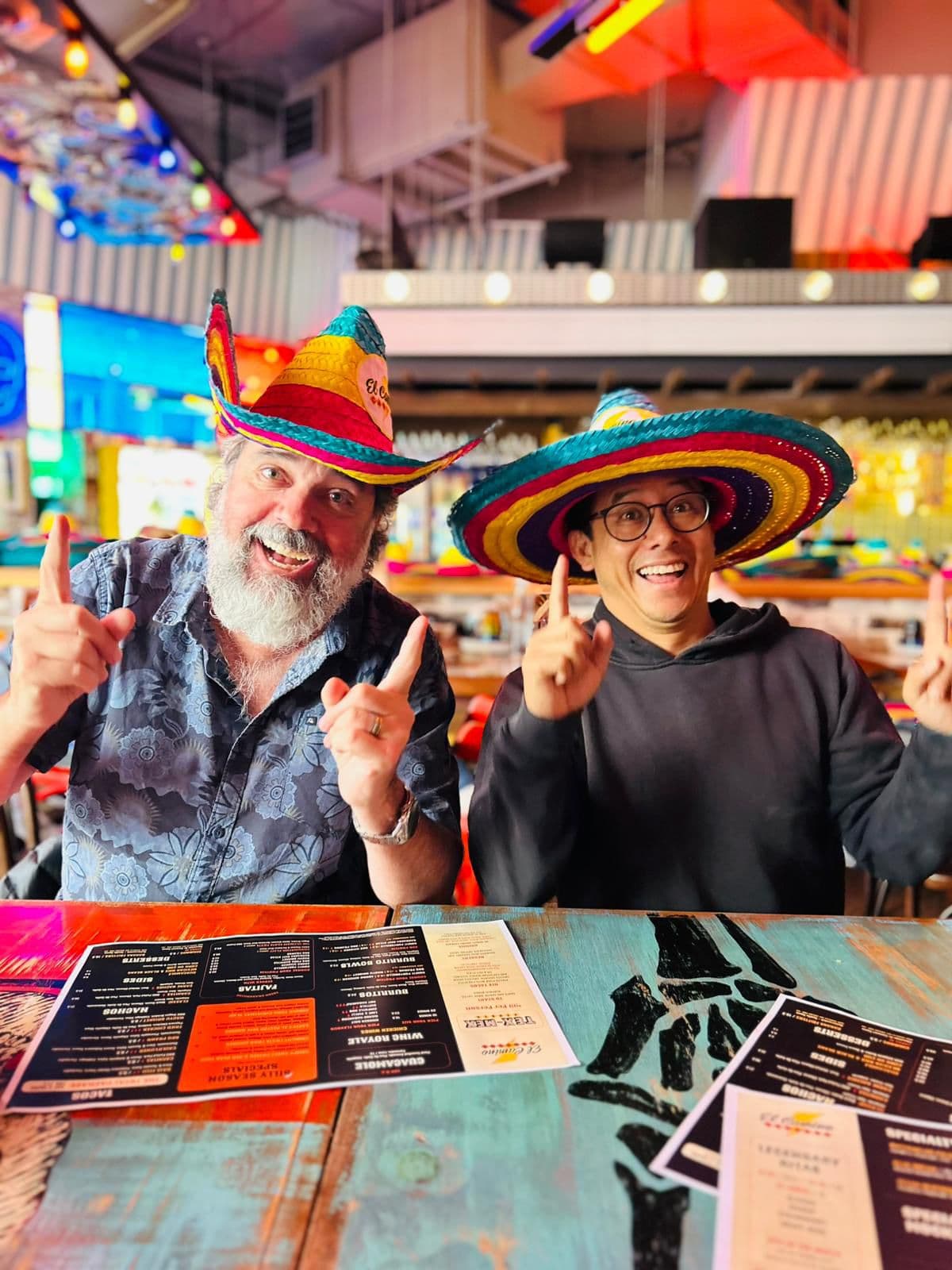
Hi there,
My name is Rodney Lester but most people call me Rocket.
I am living with brain cancer - a Grade 4 diffuse glioma tumor on the left frontal lobe of my brain.
It presented itself on 10 September 2023.
At the end of a bushwalk with my wife, daughter and her friend, my daughter asked if I wanted an ice cream. I shook my head but didn't say anything. My wife thought I was in a bad mood as I wasn't talking. Both of us were unaware that at that stage, I had lost my ability to talk.
Without realising that I was at the beginning of a medical episode, I drove 8km's from the Mount Nelson signal station to Nutgrove Beach. The only thing I remember about the drive was vomiting all over myself before picking up my family.
Cate, my darling wife, had no idea what had happened and got little information out of me as I was pretty much in a semi-vegetative state, covered in vomit, unable to talk and unaware of my surroundings.
She drove us home from Nutgrove, and dropped me off so I could clean up whilst she took our daughter's friend home. I managed to turn the water on in the shower and take my shorts off. When Cate returned to our house, she found me in the bathroom half undressed looking at the running water.
Luckily, our friend was a nurse, and he suggested that we call the ambulance.
By the time they had arrived, Cate had got me showered, and dressed and I was laying on our bed. I could smile and raise my arms when asked to, but could not talk or remember much about the situation.
As the paramedics arrived, I had a full blown seizure on the bed, and they treated me, called a second ambulance for assistance and transported me to the Royal Hobart Hospital - none of which I can recall as I was unconscious.
I woke up in hospital a few hours later, and was filled in on what had occurred.
Two days later, I underwent a brain biopsy which weeks later revealed that I had stage 2 glioma. However after weeks of testing the sample, my diagnosis was worse than initially thought - I actually had a stage 4 diffuse glioma and on 23 November had brain surgery to remove it.
The tumor was around the size of a tennis ball, and during the 3 hour operation I was awake, talking to a speech pathologist. The tumor was on my left frontal lobe, which is the control centre for things like your speech, sense of humour, executive functioning and personality traits. The therapist had to chat with me for around two and a half hours during the operation, to make sure the surgeon didn't chop away too much of my "good brain" - and only chopped out the tumor. That part was pretty weird on reflection, but what was I going to do, argue with a brain surgeon??
I was told that 76% of people with my condition would pass away within 12-24 months.
Following the brain surgeries, I had 6 weeks of daily radiation therapy, followed by 12 months of high dose chemotherapy and I take anti-seizure medication every day.
I passed the 24 month milestone in September 2025, and am still ticking over! touch wood!
The support I have been offered and opportunity to assess different treatments for myself has been excellent. It has come from multiple professors, surgeons, my GP, hospital staff in oncology and radiography, the Cancer Council, Camp Quality and other local cancer services. For myself and my family, this support has been literally amazing.
From having care packages and meals provided by friends and colleagues, to having the cancer council volunteers drive me to the hospital every day for 6 weeks to get radiation therapy, to receiving in hospital and at home support during treatments, to providing the opportunity to have fun experiences with other families affected by cancer and also supplying a stay-cation just our family. The support and care has been outstanding.
Cancer will be diagnosed in around 170,000 Australians this year and various cancer support services will assist the thousands of Australians who are directly affected, or who have friends or family affected by it.
Raising money to help underpin this support and cancer research is why my friend of over 30 years, Kelvin, is riding 1400 km (including climbing 20,000 metres!), from Canberra to Hobart on his bike. It is a great reason for you to personally offer your support in terms of money, or donations/prizes that could be used to raise money, that will contribute to the many cancer support programs available today. The monies also go to research to find a much needed cure.
I can tell you from personal experience that the ongoing support offered is very much appreciated, and in some cases can provide the relief and foundational support that many families would be lost without.
Thanks so much for any support you are able to give the team on this awesome journey.
Let's beat cancer.
Cheers,
Rocket.